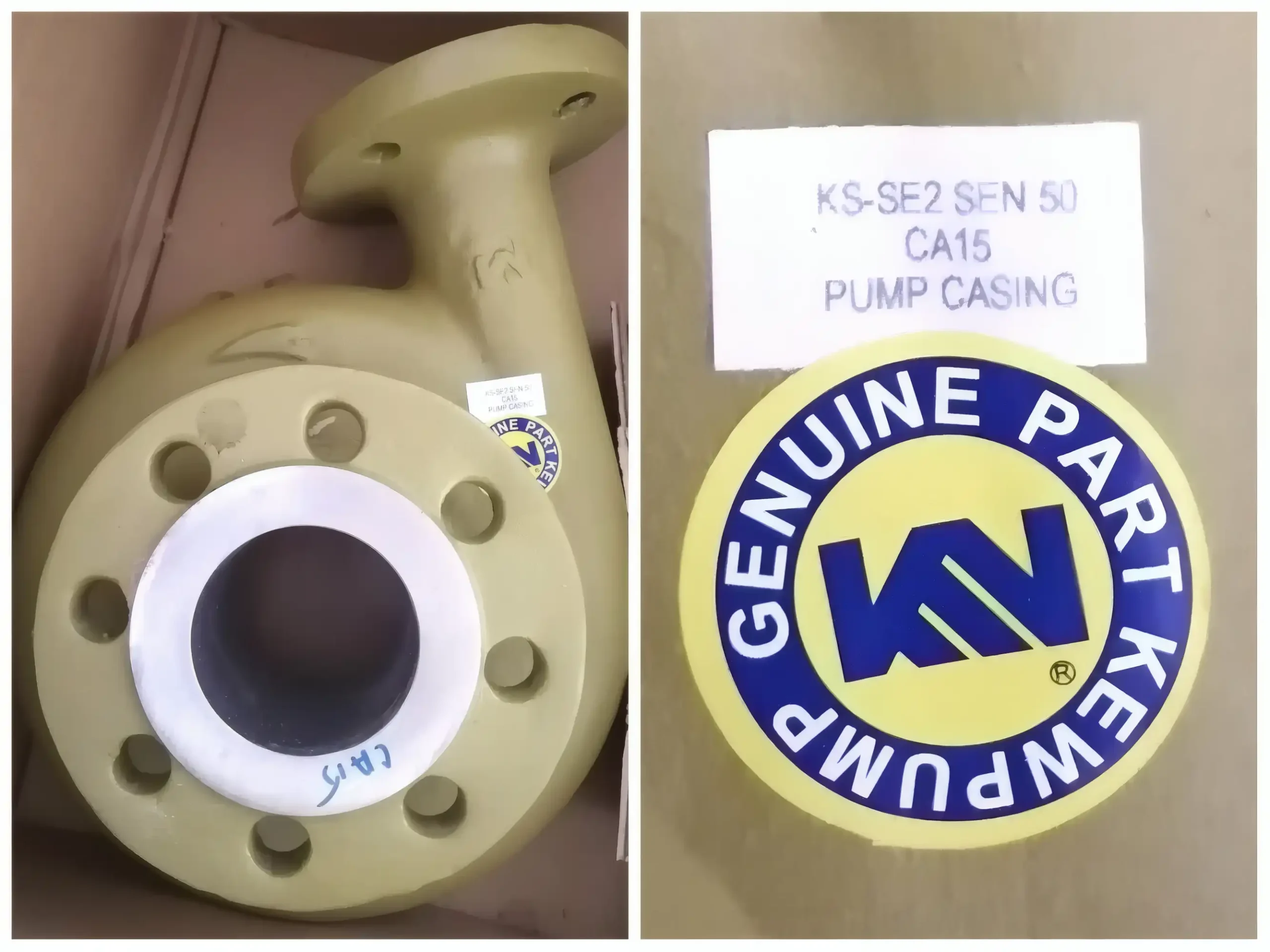
Description
Pump Casing is the main housing of a pump, responsible for containing fluid pressure and directing the flow of liquid into and out of the pump. It plays a vital role in ensuring pump efficiency, preventing leakage, and minimizing energy loss during operation.
Features of Pump Casing
High Pressure and Corrosion Resistance
Made from robust materials such as cast iron, stainless steel, brass, or industrial-grade plastic to handle pressure and corrosive fluidsFlow Direction Control
Engineered to optimize flow dynamics and reduce energy loss within the pumpVibration and Noise Reduction
Promotes smoother, quieter operation and improved system stabilityCompatible with Various Fluids
Suitable for water, oils, chemicals, and abrasive fluids across industrial processesLeak Prevention
Effectively seals the pump to maintain fluid containment and ensure system safety
Types of Pump Casings
Volute Casing
Spiral-shaped casing that converts velocity into pressure as fluid exits the impellerDiffuser Casing
Uses vanes to decelerate fluid and increase pressure, improving hydraulic efficiencySingle Volute Casing
Designed for small to medium-sized pumps, minimizing hydraulic lossDouble Volute Casing
Balances pressure forces on the impeller, ideal for high-pressure applications and reducing shaft loadSplit Casing
Features a two-piece design for easy access during maintenance, often used in large industrial pumps
Applications of Pump Casing
Water and Wastewater Systems
Regulates flow in clean water pumps and sewage handling systemsPetrochemical and Oil Industries
Used in high-pressure oil and chemical pumps requiring robust containmentFood & Beverage Processing
Ensures hygienic flow control in sanitary-grade pumpsPower Generation and Energy Plants
Handles high-pressure, high-temperature liquids in cooling and steam systemsMining and Metallurgy
Applied in pumps that transport slurry, mineral water, or fluid with solids
Advantages of Pump Casing
Improves energy efficiency by enhancing flow characteristics
Withstands high pressure and corrosion for long-term industrial use
Prevents fluid leakage and promotes safe, sealed system operation
Offers design options tailored to different industrial requirements
Reduces operational disruptions through durable and low-maintenance design