
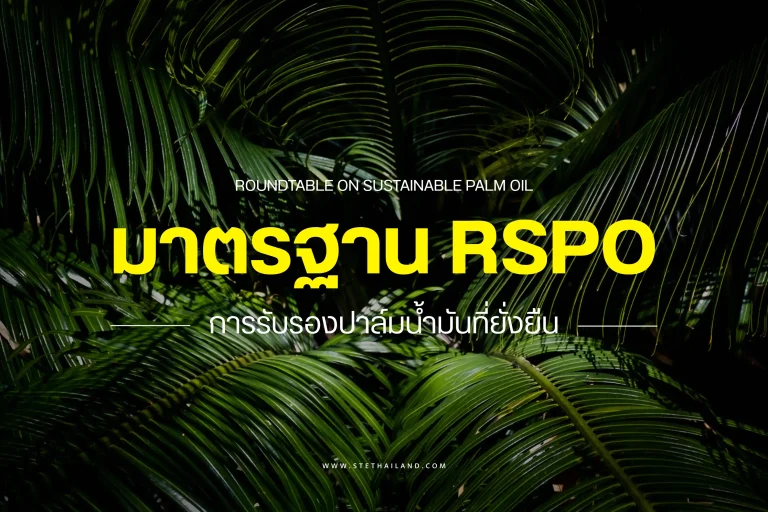
The RSPO (Roundtable on Sustainable Palm Oil) standard is one of the most important certifications for sustainable palm oil production.
Its primary objectives are to minimize environmental impact, protect labor rights, and promote sustainable development within the palm oil industry.
This article will introduce you to the RSPO standard – its requirements, best practices, and the benefits it brings to the palm oil sector.
Topic
What Is RSPO?
The RSPO (Roundtable on Sustainable Palm Oil) is an international organization established in 2004 with the mission of developing and promoting standards for sustainable palm oil production. RSPO members include farmers, palm oil mills, food manufacturers, and environmental organizations from around the world.
The RSPO standard encourages responsible production practices that benefit both society and the environment.
Key Principles of RSPO Certification
To obtain RSPO certification, producers must comply with the following principles and criteria:
Transparency
Producers must disclose information regarding production and operations to ensure traceability.
Compliance with Laws and Regulations
Operations must comply with all local, national, and environmental regulations.
Conservation of Natural Resources and Biodiversity
- Deforestation for palm oil expansion is prohibited.
- Ecologically important areas must be conserved.
Fair Labor and Community Rights
- Workers must be treated fairly; child labor and forced labor are strictly prohibited.
- The rights of local communities must be respected.
Efficient Plantation Management
Sustainable farming practices must be adopted, including reduced chemical usage and efficient energy consumption.
Continuous Improvement
Producers must develop ongoing improvement plans to enhance productivity and reduce environmental impact.
Types of RSPO Certification
- RSPO Identity Preserved (IP)
100% traceable palm oil sourced from a single RSPO-certified plantation. - RSPO Segregated (SG)
Palm oil from multiple certified sources that is kept separate from non-certified oil throughout the supply chain. - RSPO Mass Balance (MB)
A system that allows mixing of certified and non-certified palm oil, but tracks the volume of certified oil entering the system. - RSPO Book & Claim (BC)
A credit-based system where companies buy RSPO credits to support sustainable production without needing to separate supply chains.
Benefits of RSPO Certification
Environmental Protection
Promotes deforestation-free production, reduces greenhouse gas emissions, and limits water pollution.
Consumer Confidence
RSPO-certified products are increasingly favored in global markets by eco-conscious consumers.
Market Access
Certified producers gain access to international markets, especially in Europe and countries that emphasize sustainability.
Sustainable Industry Development
Encourages efficient use of resources, higher productivity, and supports smallholder inclusion without expanding farmland.
Challenges of RSPO Certification
Despite its many advantages, RSPO certification also faces key challenges:
- High Certification Costs – Smallholders may struggle with the costs of upgrading to meet RSPO requirements.
- Monitoring and Verification – Robust tracking systems are required to ensure compliance.
- Legal and Policy Barriers – National laws in some countries may conflict with RSPO standards, making implementation difficult.
Future Outlook for RSPO
Expansion into New Markets
As more countries prioritize sustainable palm oil, RSPO certification is expected to become more widespread.
Technological Integration
Blockchain and AI are being introduced to enhance traceability and transparency across the supply chain.
Government and International Support
Governments and global organizations are beginning to adopt RSPO as a requirement for both import and export of palm oil products.
Conclusion
The RSPO standard is a key framework for developing a more sustainable palm oil industry.
It promotes environmental protection, respects social and labor rights, and enhances global market competitiveness.
As technology advances and sustainability gains momentum, RSPO will remain central to the responsible growth of the palm oil sector.
Contact us
- Address
- Satun Branch : 86/52-53 Satyaphiban Road, Phiman Subdistrict, Mueang District, Satun Province 91000
- Krabi Branch : 187/10 Moo 2, Khlong Marui Subdistrict, Ao Luek Tai Subdistrict, Ao Luek District, Krabi Province 81110
- Facebook : อุปกรณ์สวนปาล์ม / อะไหล่เครื่องจักรโรงงานสกัดน้ำมันปาล์ม
- LINE : @stethailand
- Phone Numbers
- Sales Department : 081-7986338, 095-3694956
- Construction Department : 081-8969607, 095-3694956
- Palm Oil Equipment Department : 086-9646503
- Warehouse Department : 080-5388075
- Tiktok : stesatun
- Lazada : STE Thailand
- Shopee : STE Thailand
- Map :

Related Articles





Our Products